


Which Corporate Card Suits Your Small Business Best?

July 25, 2026
Choosing a corporate card is a decision about who is on the hook if the business cannot pay, and that shapes your personal risk more than any rewards rate. It matters because 62% of employer firms now use credit cards as a financing method.
In this guide, we rank six corporate cards for small businesses by liability, fees, cash requirements, and rewards, then show how to choose the right one for your stage.
Key takeaways:
- Ramp is the top pick for incorporated small businesses that meet its cash bar and pay in full.
- Ramp, Rho, and BILL Divvy require no personal guarantee; Amex, Chase, and Bank of America do.
- BILL Divvy is the only card here open to sole proprietors and requires about $20,000 in the bank.
- Corporate cards from Ramp and BILL Divvy skip personal credit checks; traditional issuers pull personal credit.
- Choose by liability and cash requirement first, then compare expense software and rewards.
An overview of the best corporate cards for small businesses
The six cards below split cleanly into two groups. Ramp, Rho, and BILL Divvy underwrite the business itself, so no owner signs a personal guarantee, while American Express, Chase, and Bank of America trade that protection for revolving credit and richer rewards.
Which group fits comes down to your entity type, how much cash sits in the bank, and whether you need to carry a balance:
| Card | Best for | Personal guarantee | Annual/software fee | Standout feature |
|---|---|---|---|---|
| Ramp | Incorporated SMBs that want spend controls without personal risk | No | No card or core platform fee | Free expense management with automated transaction coding |
| Rho | Companies with steady cash that repay quickly | No | No annual, subscription, or per-card fee | Cash back tied to repayment speed |
| BILL Divvy | Sole proprietors and very small incorporated businesses | No | No card or software fee | Budget-based limits with free spend software |
| American Express Business | Category rewards and statement credits | Yes | Varies by card | Category rewards and premium statement credits |
| Chase Ink Business | Businesses that want revolving credit | Yes | Varies by card | Intro APR options on select cards |
| Bank of America | Building a business credit file quietly | Yes | Varies by card | Reports to business bureaus, off consumer bureaus |
We lead with Ramp because it removes the personal guarantee and the fees while handling the expense work that usually eats a finance team's week, though the best fit depends on your structure and cash.
1. Ramp
Ramp issues a corporate charge card to the business entity, so approval rests on business financials, not the owner's personal credit. A company needs a registered LLC, corporation, or limited partnership, an EIN, and a meaningful U.S. business bank balance. Ramp runs no personal credit check and no personal guarantee.
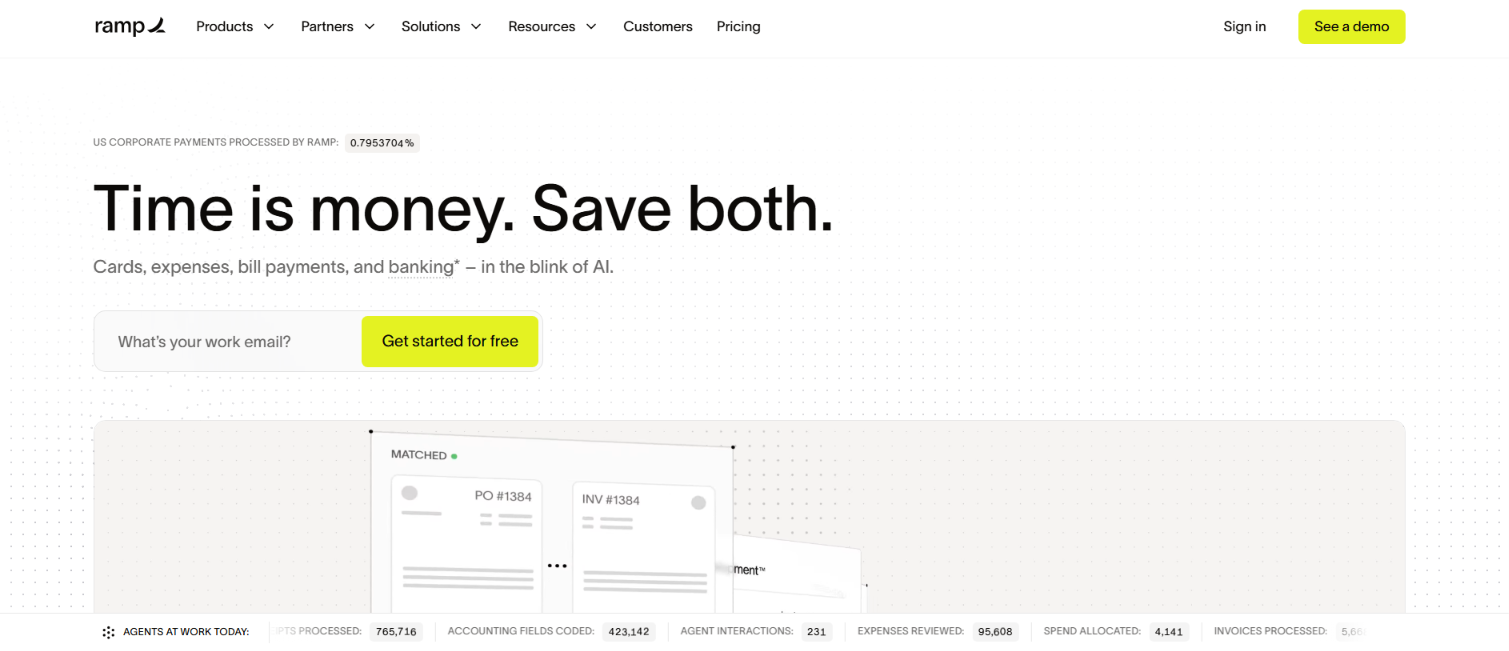
The card includes physical and virtual cards, per-card limits, merchant-category controls, receipt collection, and syncs with QuickBooks, NetSuite, and Xero. With built-in controls and receipt capture, teams catch policy issues before month-end cleanup.
The tradeoff is payment in full each month, so a company cannot carry debt, and Ramp does not accept sole proprietors or unregistered businesses. For an incorporated, growth-stage company that wants less manual expense work without risking a founder's credit, it usually fits.
Ramp pros:
- No personal guarantee or credit check: Ramp underwrites the business, not the founder, keeping personal repayment exposure off the table.
- No annual or foreign transaction fees: The card carries no annual, foreign transaction, late, or overlimit fees, among the stronger no foreign transaction fee cards.
- Free controls and flat cash back: Free receipt capture, approval workflows, and virtual cards come standard, with flat cash back on every account.
Ramp cons:
- Payment in full required: Ramp settles monthly, so the business cannot carry a balance for short-term financing.
- Incorporated businesses only: Sole proprietors and unregistered businesses are not eligible, so a registered entity and EIN come first.
- Some syncs need the paid tier: Real-time NetSuite and Sage Intacct syncing requires Ramp Plus, though QuickBooks and Xero work free.
Ramp pricing: Ramp lists the card and core platform as free in its pricing, while Ramp Plus runs $15 per user per month plus a platform fee.
Ramp is best for: Incorporated, growth-stage companies with U.S. operations that want less manual expense work without a personal guarantee.
2. Rho
Rho pairs a corporate card with cash back that rises as a company repays faster, which suits steady cash flow. It lists no minimum balance on its daily-terms card, while the monthly-terms program requires a minimum cash balance of $75,000.
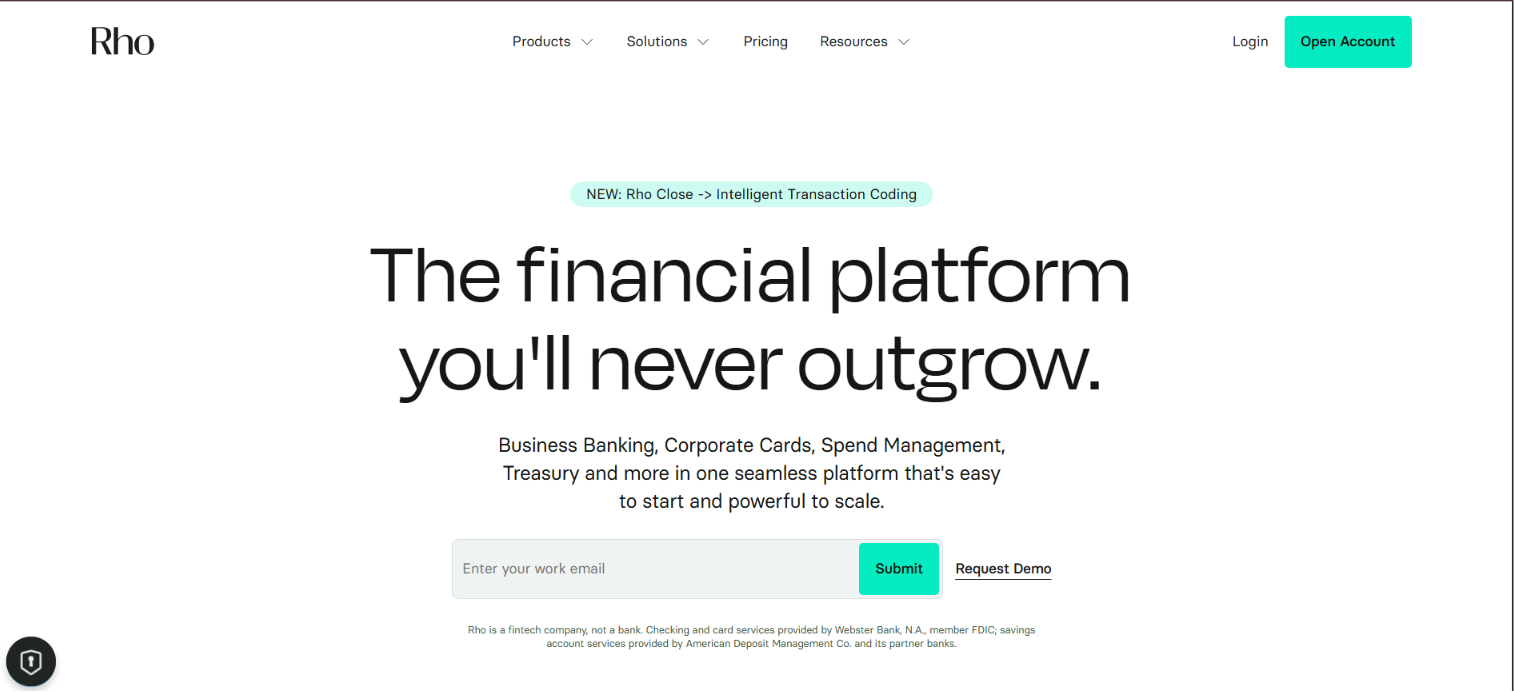
Cash back reaches up to 1.5% with daily payments and 1% on monthly terms, so repayment cadence drives the return. Rho requires no personal guarantee, keeping a founder's personal credit out of underwriting.
Rho states that its cards carry no annual fee, no subscription fees, and no per-card fees, though the card pages say less about repayment terms, so confirm whether the account is pay-in-full before applying. For a business with reliable cash, Rho is worth a direct conversation.
Rho pros:
- Cash back tied to repayment speed: Paying daily earns up to 1.5%, rewarding businesses that settle quickly.
- No personal guarantee: Rho underwrites the business, keeping a founder's personal credit out of the application.
- No firm minimum on daily terms: The daily-terms card lists no minimum balance, unusual at this tier.
Rho cons:
- Monthly terms raise the bar: The monthly program requires a minimum cash balance of $75,000, favoring real reserves.
- Thin terms disclosure: The card pages say little about repayment terms and balance policy, so details need direct confirmation.
- Rewards depend on fast repayment: The top rate applies only with daily payment, so a monthly cadence earns less.
Rho pricing: Rho publishes no annual fee, subscription fee, or per-card fee, though repayment terms are worth confirming directly before applying.
Rho is best for: Companies with steady cash that want reward rates tied to repayment speed and can confirm terms directly.
3. BILL Divvy
The BILL Divvy Corporate Card is the most accessible no-personal-guarantee option here, and the only one open to sole proprietors. Most applicants need about $20,000 in a business bank account, and BILL runs only a soft credit check.
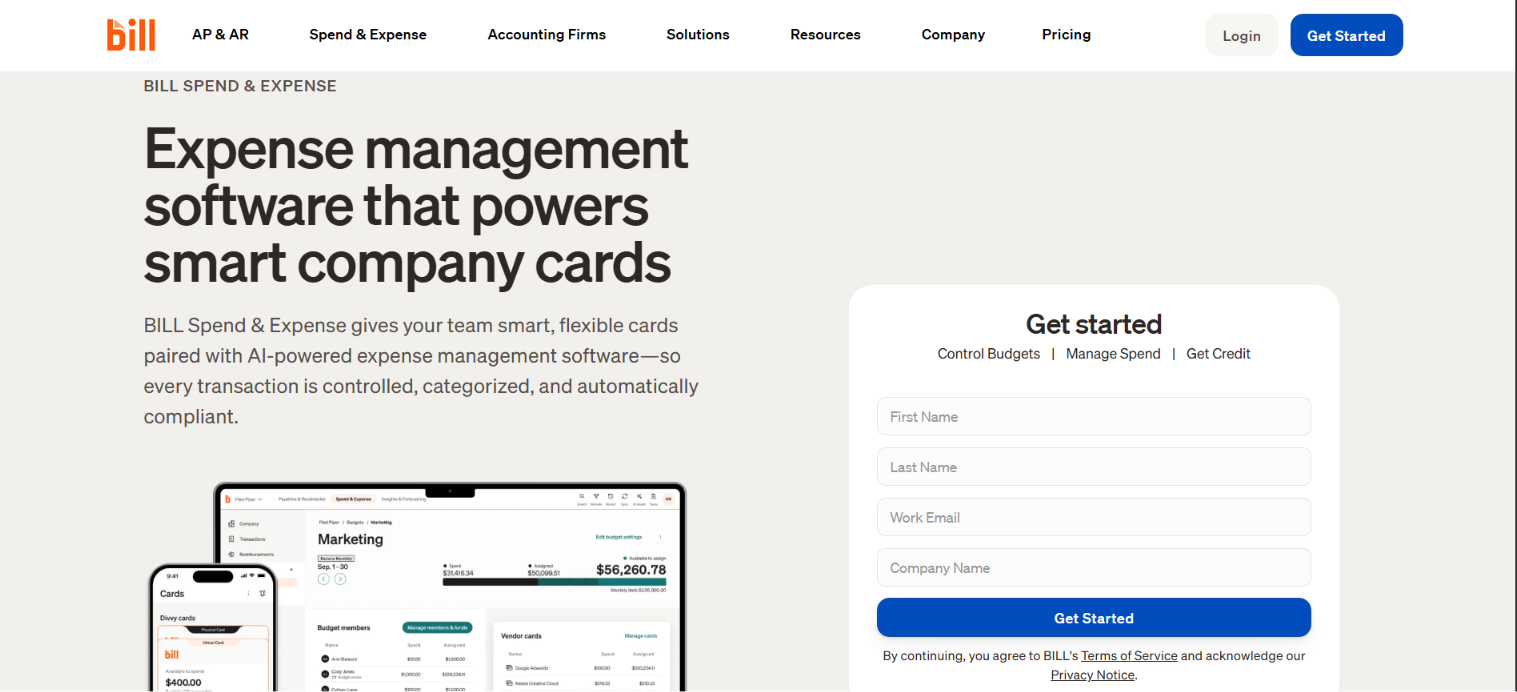
Credit lines can reach up to $5 million based on revenue, cash balance, history, and credit scores, scaling toward high-limit business credit cards territory. The free BILL Spend & Expense platform adds budgets, spending limits, and virtual and physical cards.
The limits are in the details: manual receipt uploads instead of automated capture, capped virtual-card rewards, and top restaurant and hotel rates that require weekly billing. A delinquent account can also reach the owner's consumer credit report.
BILL Divvy pros:
- No personal guarantee, soft check only: BILL skips the guarantee and runs only a soft inquiry, so applying does not dent personal credit.
- Open to sole proprietors: Unlike Ramp, it accepts sole proprietors alongside LLCs and corporations.
- Free budgeting software: Budgets, limits, and virtual cards come free, keeping approvals and accounting in one workflow.
BILL Divvy cons:
- Manual receipt matching: Receipt capture relies on manual uploads, adding admin that Ramp automates.
- Capped virtual-card rewards: Rewards on virtual cards are capped, and the best rates require weekly billing.
- Delinquency can hit personal credit: A seriously past-due account can appear on the owner's consumer report.
BILL Divvy pricing: The BILL Divvy Corporate Card and BILL Spend & Expense platform are free, with no annual or software fee.
BILL Divvy is best for: Sole proprietors and very small incorporated businesses below Ramp's cash bar that want budget controls without personal liability.
4. American Express Business
American Express business cards help you start, manage, and help grow your business with the backing of American Express. Most require a personal guarantee, and Amex checks personal credit at application. In return, the lineup runs from a no-fee cash-back card to a premium travel card.
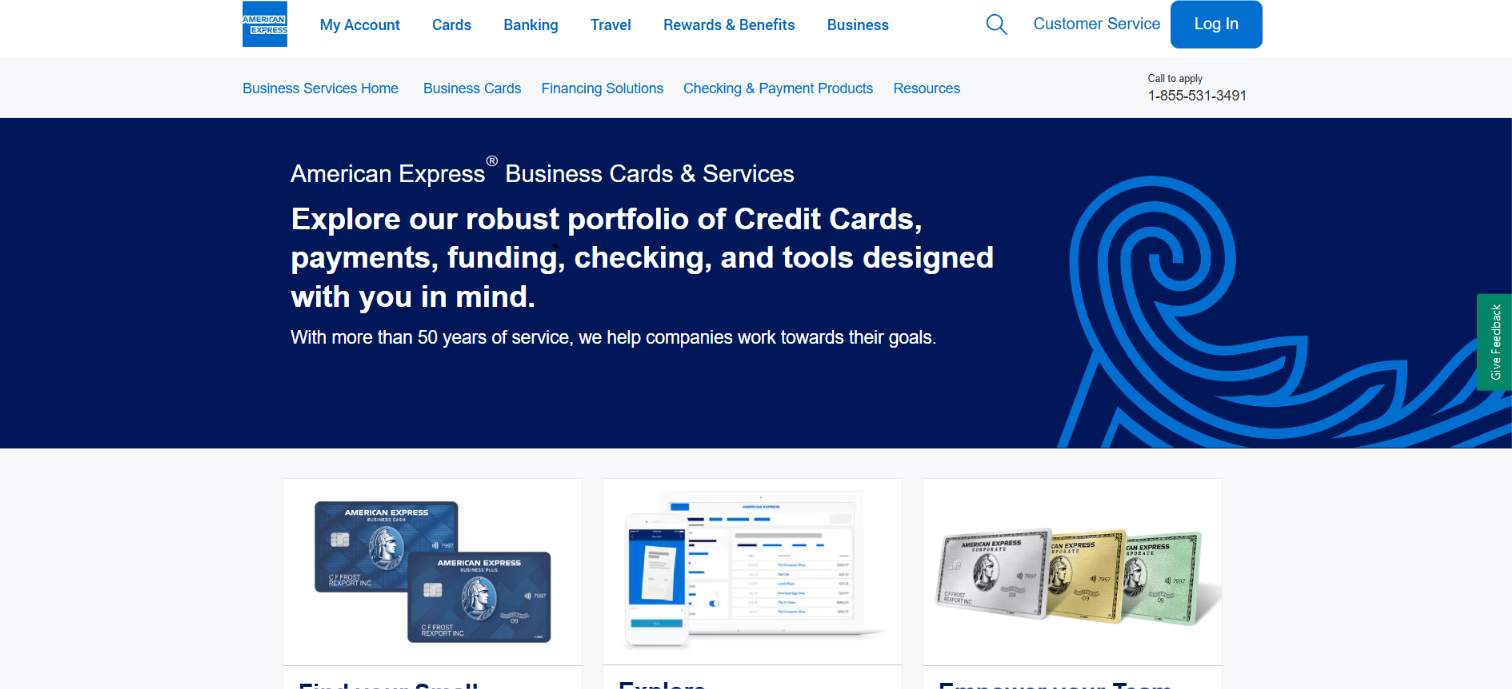
The cards earn Membership Rewards points or cash back, and Amex reports only negative history to consumer bureaus. Blue Business Cash returns cash on everyday spending up to a cap, Business Gold rewards top categories each cycle, and Gold and Platinum add statement credits on select purchases.
The catch is liability and structure: every card carries a personal guarantee, rates are capped on the no-fee and Gold cards, and none bundle spending software the way Ramp or BILL Divvy do. When spending concentrates in travel or a few categories, the perks can outweigh those limits.
American Express Business pros:
- Category rewards and credits: Business Gold rewards top categories each cycle, and Gold and Platinum add statement credits on select purchases.
- No-fee entry option: Blue Business Cash earns cash back on everyday purchases with no annual fee.
- Only negative history hits personal credit: Amex reports serious delinquencies to consumer bureaus but keeps routine activity commercial.
American Express Business cons:
- Personal guarantee on every card: Each card puts the owner's personal credit on the hook if the business cannot pay.
- Capped reward rates: Rates on the no-fee and Gold cards are capped past set thresholds.
- No bundled software: The cards include no spend management tools, so expenses get tracked elsewhere.
American Express Business pricing: American Express sets fees by card, from no-fee options to premium travel cards with fees in the hundreds of dollars, so check the current fee first.
American Express Business is best for: Businesses with heavy travel or concentrated category spend that want premium perks and can accept personal liability.
5. Chase Ink Business
Chase's Ink lineup offers personally guaranteed cards built around revolving credit. Ink Business Unlimited earns flat cash back with no annual fee, Ink Business Cash rewards office and telecom categories, and Ink Business Preferred rewards travel, shipping, advertising, and telecom spend.
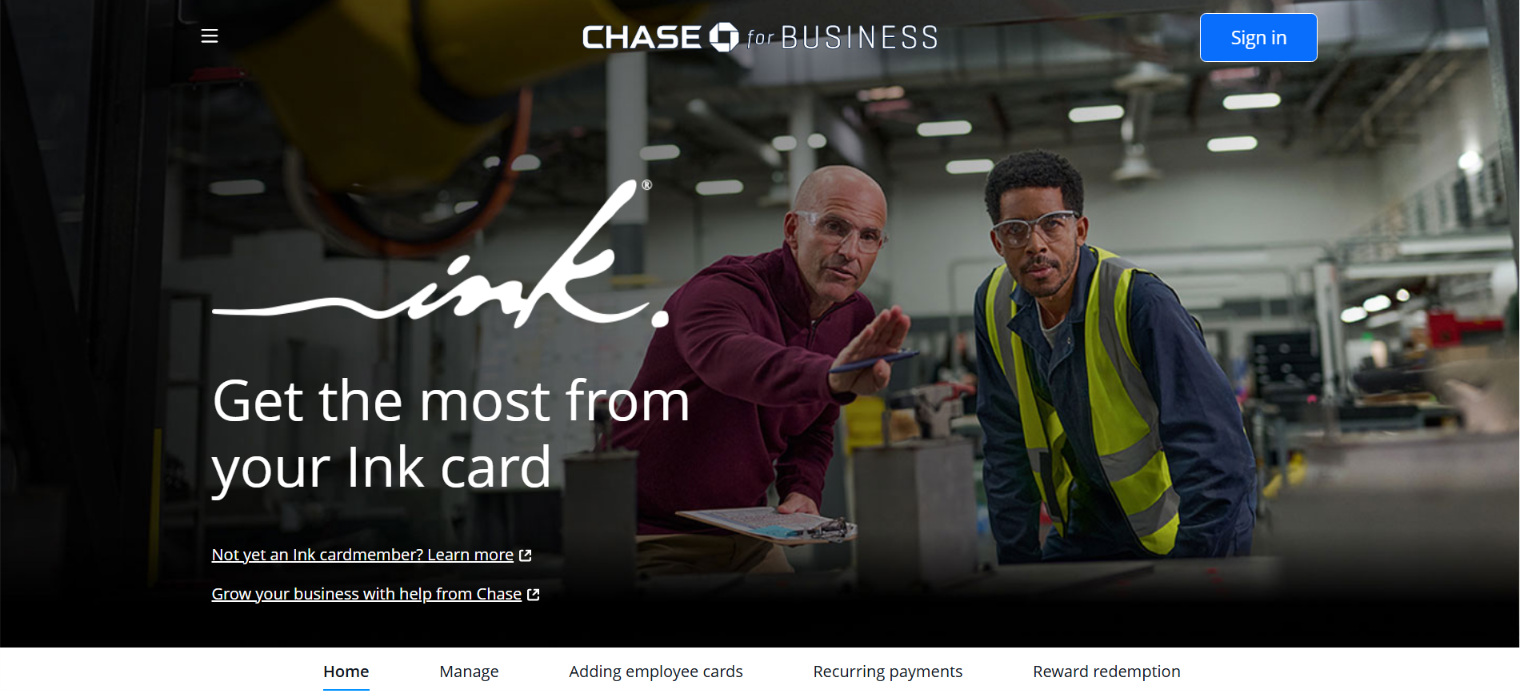
It fits owners who want the option to carry a balance and a sign-up bonus, with richer offers on cards that require larger early spend. Ink Business Unlimited adds an intro APR window on purchases, much like other 0% APR cards.
Chase reports Ink card activity to the business bureaus, including Dun & Bradstreet, Experian Business, and Equifax Business, and routine activity generally stays off consumer bureaus, though a seriously delinquent account can still reach personal credit.
Applicants need good-to-excellent personal credit and a personal guarantee, and variable APRs apply once a balance carries over.
Chase Ink Business pros:
- Revolving credit and bonuses: The Ink cards allow a carried balance and offer sign-up bonuses across the lineup.
- Intro APR on purchases: Ink Business Unlimited adds an intro APR window for low-cost short-term financing.
- Builds business credit: Chase reports Ink activity to Dun & Bradstreet, Experian Business, and Equifax Business.
Chase Ink Business cons:
- Personal guarantee and credit pull: Chase requires good-to-excellent personal credit and a personal guarantee.
- Capped category bonuses: Bonus categories on the Cash and Preferred cards are capped, then drop to the base rate.
- Interest on carried balances: Variable APRs apply once the intro window ends and a balance stays on the card.
Chase Ink Business pricing: Chase offers no-annual-fee Ink cards and a Preferred card with an annual fee, so check the current schedule before applying.
Chase Ink Business is best for: Small businesses that want revolving credit or an intro APR window and whose owners will sign a personal guarantee.
6. Bank of America
Bank of America's business cards work like traditional small business credit cards: issued to the owner, underwritten on personal credit, and open to a revolving balance. Like other bank issuers, they require a personal guarantee, with no published exception.
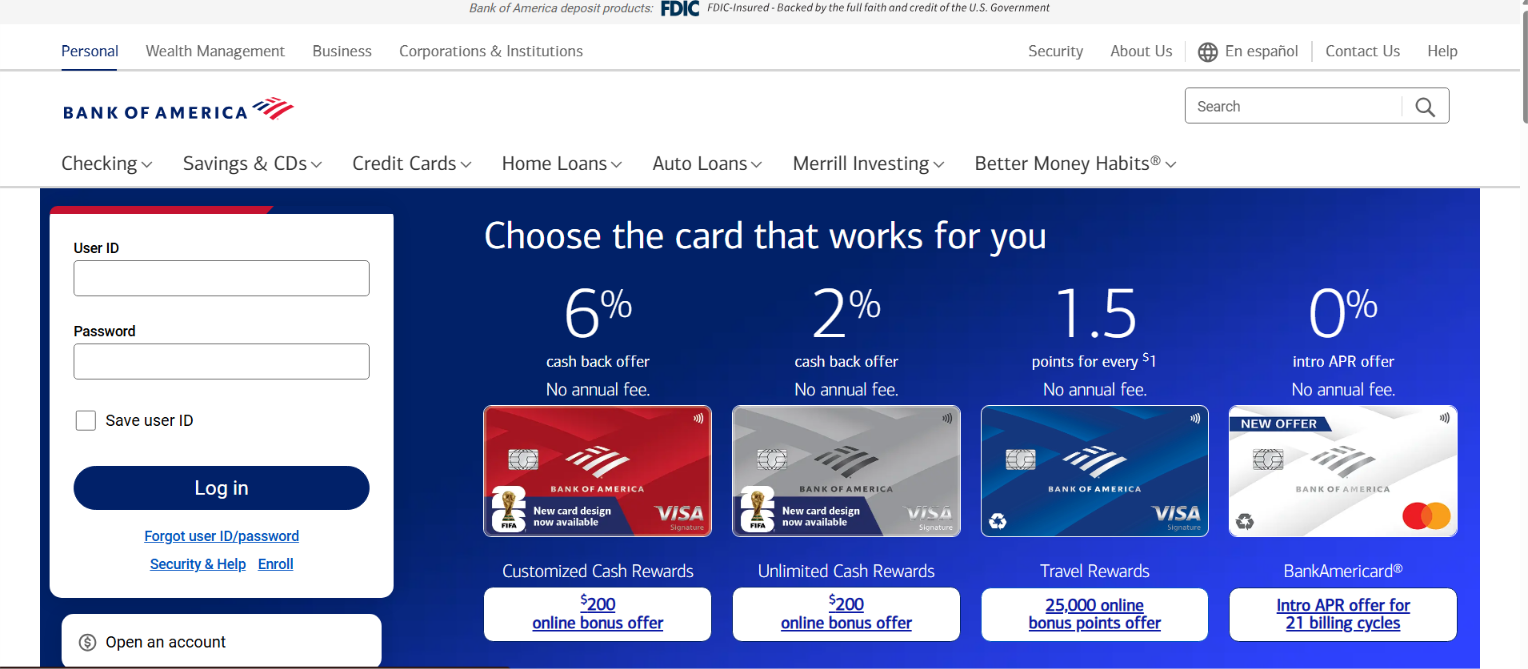
The upside is credit-building without cluttering the personal file. Bank of America reports to Dun & Bradstreet, Experian Business, and Equifax Business, while routine activity stays off consumer bureaus, and revolving credit adds month-to-month flexibility.
What the cards give up is the software layer. They include no built-in expense management, so owners add their own process to track spend and build business credit over time, and fees vary by card.
Bank of America pros:
- Reports to business bureaus: Bank of America reports to Dun & Bradstreet, Experian Business, and Equifax Business, building a commercial file.
- Off the consumer report: Routine activity stays off consumer bureaus, so normal use does not touch personal credit.
- Revolving flexibility: The cards allow a carried balance month to month for uneven cash flow.
Bank of America cons:
- Personal guarantee applies: Like other bank issuers, these cards require a personal guarantee, with no no-guarantee route.
- No expense software: The cards bundle no spend management, so expenses get handled separately.
- Fees vary by card: Each card's fee schedule needs a check, since terms differ across the lineup.
Bank of America pricing: Bank of America sets fees by card and charges no software fee, since it bundles a no-spend platform.
Bank of America is best for: Owners building a business credit file who already have an expense process and can accept personal liability.
How do you choose the best corporate card for your small business?
Start with liability, because it decides your personal exposure if the business cannot pay. A corporate card is a company-issued charge card that usually requires payment in full and underwrites the business. At the same time, a personal guarantee is a promise that the owner repays company debt personally, which can weaken the practical protection of an LLC or corporation.
If your company is incorporated with enough cash, a no-guarantee card like Ramp or BILL Divvy cuts that risk; if you are a sole proprietor beyond Divvy's reach or need to carry a balance, a card from Chase, Amex, or Bank of America is the practical route.
Then weigh expense-management savings against rewards, since the time you save can outrun a small cash-back difference. A single expense report costs $58 and takes 20 minutes, so a card with built-in controls and an expense management software layer often pays off faster than a richer rate.
If your business is incorporated and holds enough cash to qualify, Ramp is the closest thing here to a default: no personal guarantee, no annual or foreign transaction fees, and expense software included rather than bolted on. You can see a demo to check how its controls and coding would handle your current close.
Frequently asked questions about corporate cards for small businesses
What is the best corporate card for a small business?
Ramp is the best fit here if your incorporated small business meets its cash requirement and does not need revolving credit. It charges no annual, foreign transaction, or late fees, skips the guarantee and credit check, and includes free expense software with card-level controls. If you need to carry debt, Ramp will not fit, since it requires payment in full.
Can a small business get a corporate card with no personal guarantee?
Your small business can get a no-guarantee corporate card if it meets the issuer's structure and cash requirements. Ramp accepts corporations, LLCs, and limited partnerships with a qualifying U.S. business bank account, while BILL Divvy accepts lower balances and even sole proprietors. For a sole proprietor, BILL Divvy is the more accessible option.
Do corporate cards require a personal credit check?
Corporate cards usually underwrite on business financials rather than personal credit. Ramp runs no personal credit check, and BILL Divvy runs only a soft check, much like other cards with no credit check. A small business card from Chase, Amex, or Bank of America does pull personal credit.
What revenue or funding do you need to qualify for a corporate card?
The cash or funding you need depends on the issuer and card type. Ramp states no minimum revenue but expects a meaningful business bank balance, while fintech cards weigh your structure, balance, cash flow, and operating history. American Express programs generally set higher revenue expectations than fintech cards.
Can a startup or new small business get a corporate card?
A new company can qualify if it is incorporated and holds enough cash, since fintech issuers weigh bank balance and structure more than time in business. Ramp and BILL Divvy often work for young companies with a funded U.S. business account, and there are dedicated corporate cards for startups worth comparing. A brand-new sole proprietor with little cash may need an easier-to-get small business card instead.


