


6 Top Business Credit Cards With No Credit Check for LLCs and Corporations

July 4, 2026
A hard inquiry from a business credit card application can shave points off your personal credit score and remain on your report for about 2 years, even when the card is strictly for company spending.
Growing companies increasingly skip that trade-off, since fintech issuers now approve business cards based on bank balance and revenue rather than a personal FICO score.
In this guide, we explore how approval without a personal credit pull works, the best no-credit-check cards available right now, and what separates a true no-check card from one that only skips the hard inquiry.
Key takeaways:
- A hard inquiry from a business credit card application can lower a personal credit score and stay on the credit report for about two years.
- Ramp requires at least $25,000 in a connected US bank account and skips both the personal credit check and the personal guarantee.
- Rho sets no fixed cash minimum; instead, it scales a company's credit limit based on its cash balance, revenue growth, and funding history.
- Most no-credit-check business cards are charge cards, so the full balance comes due each billing cycle instead of being carried forward.
- A no-credit-check business card only builds business credit when the issuer reports activity to Dun and Bradstreet, Experian Business, or Equifax Business.
An overview of the best business credit cards with no credit check
We compared six no-credit-check cards on personal-guarantee terms, entity eligibility, cash minimums, and repayment structures to distinguish true no-check corporate cards from soft-check options and credit-building tools.
Here’s an overview before the deep-dive:
| Card | Personal credit check | Personal guarantee | Entity eligibility | Cash or revenue minimum | Annual fee | Repayment type | Best fit |
|---|---|---|---|---|---|---|---|
| Ramp Business Card | No personal credit check | No personal guarantee | LLCs, corporations and LPs | At least $25,000 in a connected U.S. bank account | $0 | Charge card | Companies that want spend controls alongside credit |
| Rho Corporate Card | No personal credit check | No personal guarantee | LLCs, corporations, and LPs | No fixed minimum ; limits scale with cash and revenue | $0 | Charge card | Growth-stage companies that want a limit tied to overall financials |
| BILL Divvy Corporate Card | Soft pull, recommended FICO minimum | Confirm before applying | Includes sole proprietors | Minimum bank balance required | $0 | Charge card | Sole proprietors avoiding a hard pull |
| Stripe Corporate Card | Soft pull only | No personal guarantee | LLCs and corporations with a Stripe account | Underwritten by Stripe's processing history and cash reserves | $0 | Charge card | Stripe-native businesses with thin credit files |
| Nav Prime Card | No personal credit check | No personal guarantee | Sole proprietors, LLCs, and corporations | No revenue or time-in-business minimum | $0, requires a paid membership | Charge card | Brand-new businesses starting a credit file |
| Capital on Tap Business Credit Card | Soft pull on personal credit | Personal guarantee required | LLCs, corporations, and partnerships | About $2,500 in monthly revenue and 6 months in business | $0 | Revolving credit | Newer, lower-revenue businesses |
Let’s dive in!
1. Ramp Business Card
Ramp underwrites on business financials, with no personal credit check or personal guarantee, and applicants use only an EIN, paired with built-in expense management and spend controls.
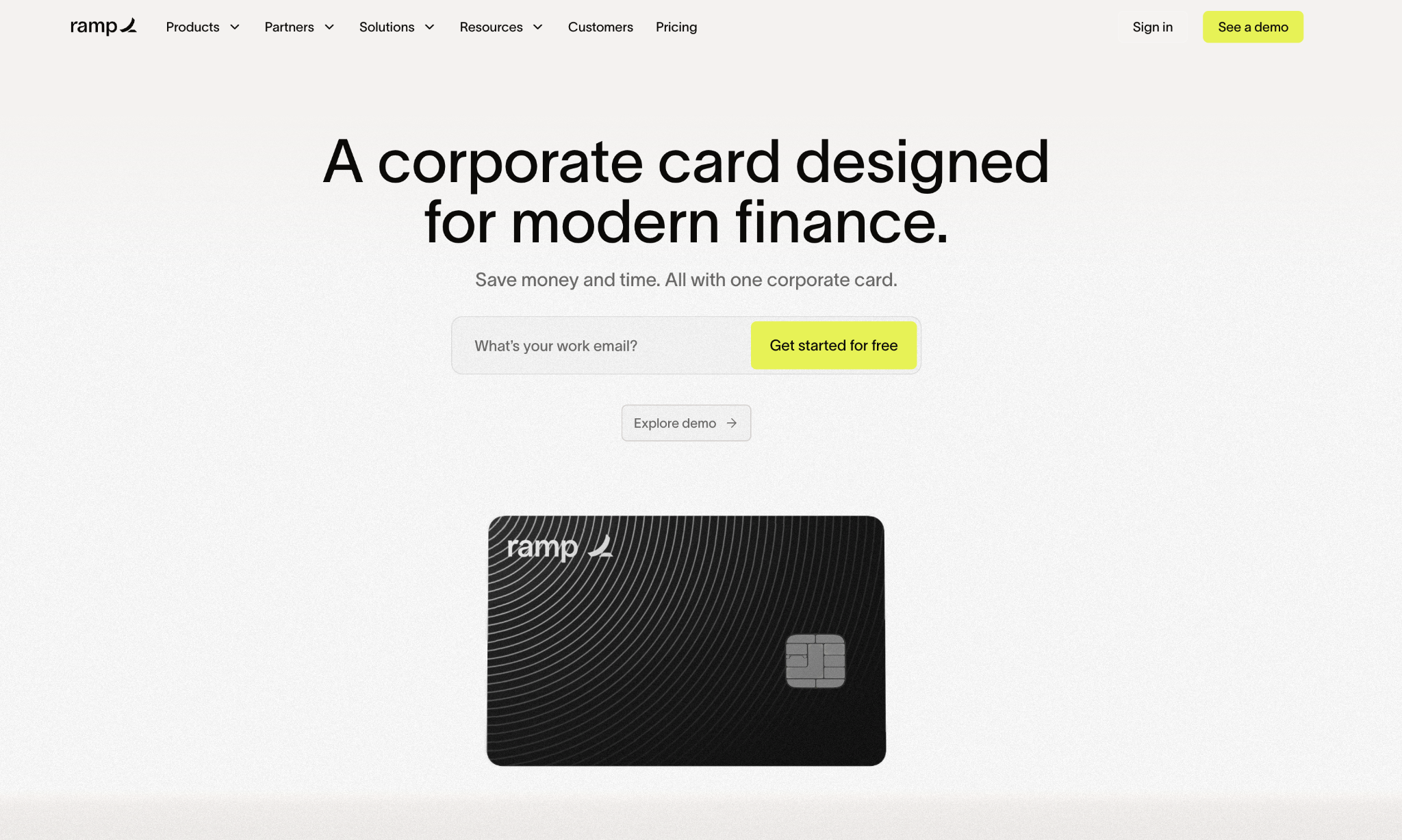
The application connects to a business bank account, and Ramp verifies that at least $25,000 is in that account before it opens a line of credit. Hence, the credit decision comes down to cash on hand rather than a founder's credit history.
Finance teams get real-time visibility into every purchase, automated receipt matching, and the ability to set spend limits by employee or category, which turns the card into a control tool as much as a payment method.
The trade-off is scope: Ramp limits itself to U.S.-registered LLCs, corporations, and limited partnerships, so a sole proprietor or a company that runs most of its spending outside the U.S. won't qualify, no matter how strong the bank balance looks.
Because it's a charge card, the full balance comes due each billing cycle, which works well for companies with predictable cash flow but adds pressure for those with lumpy revenue.
Ramp pros:
- No personal credit check: Ramp reads business bank and revenue data instead of pulling a founder's FICO score.
- No personal guarantee: The business carries the liability, not the individual signing up.
- No annual fee or foreign transaction fees: Ramp charges $0 to hold the card. It doesn't charge a separate foreign transaction fee, though purchases that clear in a foreign currency can carry a currency conversion markup of up to 3%.
- Flat cash back: Every purchase earns the same rate regardless of category.
- Built-in expense management: Spend controls, receipt matching, and approvals ship with the card, rather than requiring separate software.
Ramp cons:
- Charge card structure: The balance is due in full each cycle, so there's no revolving option if cash gets tight.
- Not available to sole proprietors: Only LLCs, corporations, and limited partnerships can apply.
- Mostly U.S.-based requirement: Companies with significant non-U.S. operations or spend may not qualify.
Best for: LLCs and corporations with at least $25,000 in the bank that want spend visibility built into the card.
Pricing: The Ramp Business Card carries a $0 annual fee and requires at least $25,000 in a connected U.S. business bank account.
2. Rho Corporate Card
Rho, issued by Webster Bank, skips the personal credit check and personal guarantee and bases the credit limit on cash balance, revenue growth, and spending patterns rather than a flat deposit.
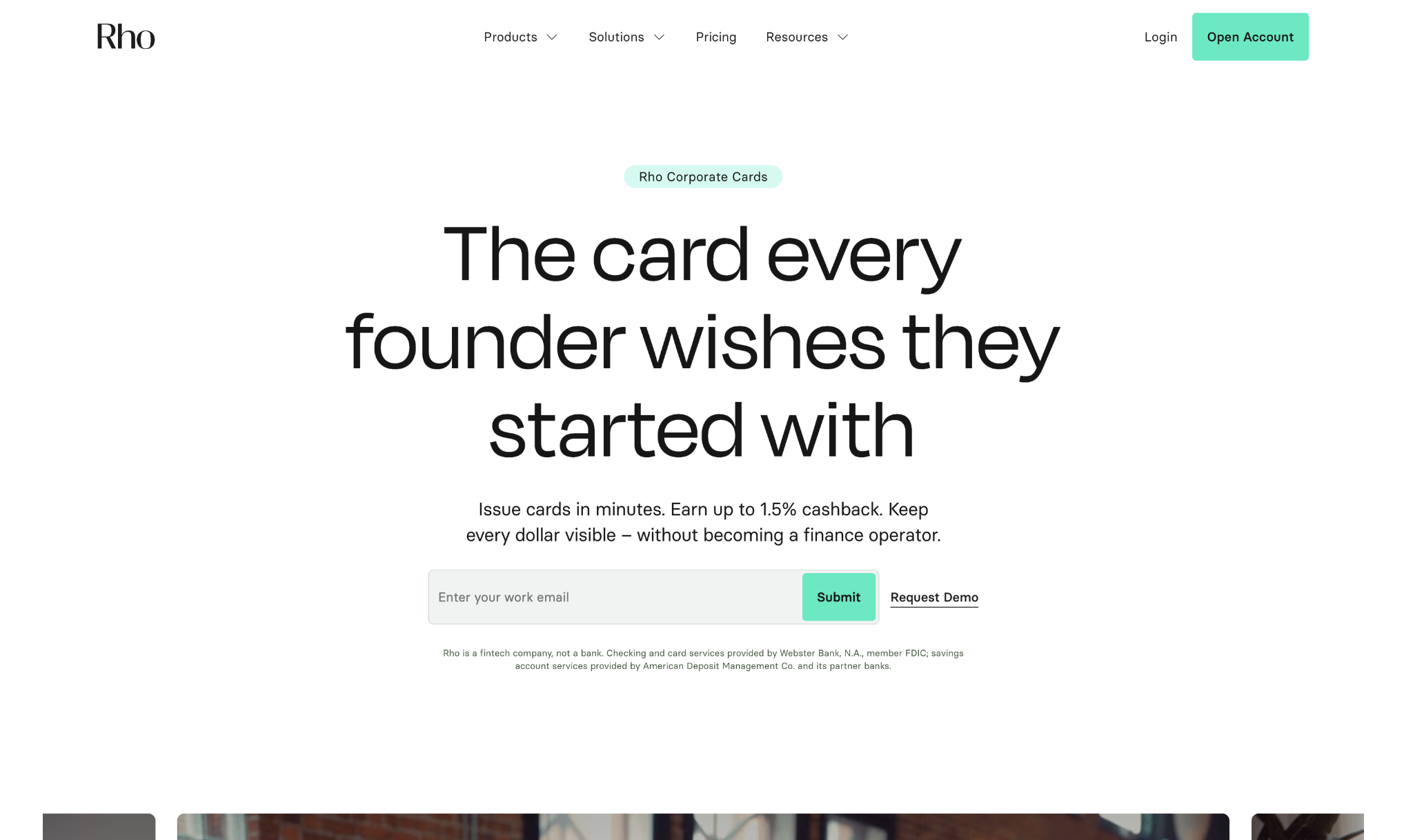
Rho's underwriting pulls from several signals at once, including cash on hand, revenue growth, funding history for venture-backed companies, and spending patterns, which is why two companies with the same bank balance can land at different credit limits.
That broader approach tends to favor growth-stage companies with strong fundamentals over those just clearing a minimum balance.
Some Rho accounts repay daily rather than on a single monthly due date, pulling the prior day's spend from a linked Rho checking account each morning, which keeps balances from stacking up but requires enough daily liquidity to cover it. Like the other fintech charge cards here, Rho stays closed to sole proprietors and requires a registered LLC, corporation, or LP.
Rho pros:
- No personal credit check: Approval is based on business financials rather than a founder's credit file.
- No personal guarantee: Rho doesn't hold an individual personally liable for the balance.
- Growth-tied limits: Credit lines can scale higher than cards capped at a single fixed cash minimum.
- Open to LPs: LLCs, corporations, and limited partnerships can all apply, not just standard corporations.
Rho cons:
- No published minimum: Without one fixed cash threshold, it's harder to know in advance whether a given balance qualifies.
- Daily repayment on some accounts: Balances are drawn from a linked checking account each day instead of once a month.
- Not available to sole proprietors: A registered entity must apply.
Best for: Venture-backed and growth-stage companies that want a credit limit tied to overall financial health instead of one fixed number.
Pricing: The Rho Corporate Card has a $0 annual fee, with credit limits set by cash position, revenue, and growth trajectory rather than a published minimum.
3. BILL Divvy Corporate Card
BILL Divvy is better described as a soft-check card than a true no-check card. Applying avoids a hard inquiry, but the card carries a recommended FICO of 670+, so personal credit still enters the decision.
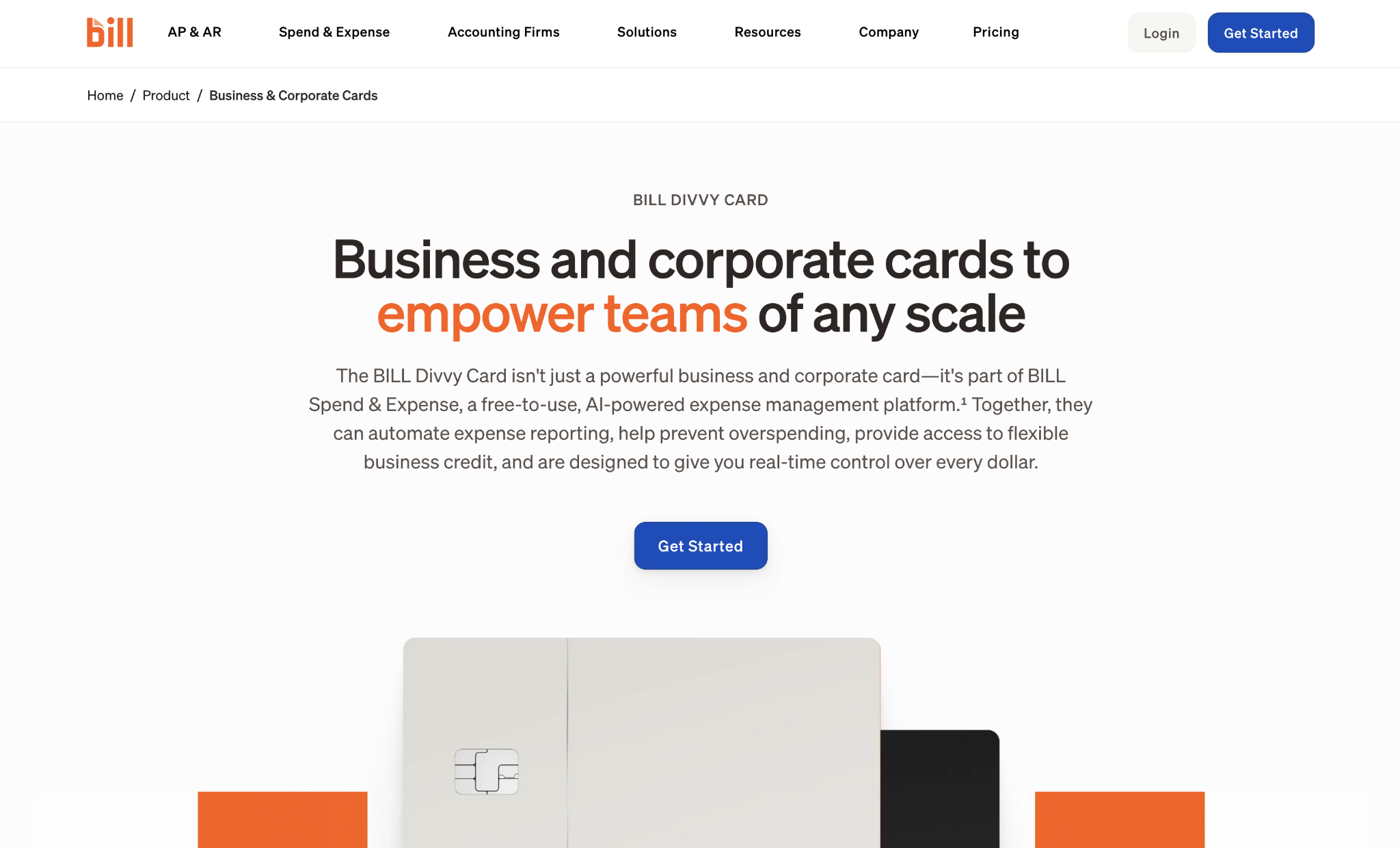
Divvy's soft pull means that checking eligibility doesn't add an inquiry to a personal credit report the way a full application would, which makes it a reasonable first stop for owners comparing offers.
Credit lines scale with the business's revenue and cash balance once approved, and the card doubles as a lightweight expense management tool with built-in receipt capture and budget tracking.
Divvy is one of the few cards in this comparison that accepts sole proprietors, making it available to businesses that haven't incorporated yet. The rewards program has strings attached, though: falling below a required spending threshold in a given month can forfeit that month's cash back, so the card rewards consistent usage more than occasional spend.
BILL Divvy pros:
- Soft pull only: Applying doesn't generate a hard inquiry on personal credit.
- Available to sole proprietors: One of the few cards here that doesn't require incorporation.
- $0 annual fee: No cost to hold the card.
- Revenue-based credit lines: Limits scale with business revenue and cash balance rather than a flat number.
BILL Divvy cons:
- Recommended FICO score of 670 or higher: Personal credit still factors into approval, even with a soft pull.
- Rewards can be forfeited: Falling below a monthly spending threshold can cancel that month's cash back.
- Charge card structure: The balance is due in full each cycle.
Best for: Sole proprietors or businesses with fair to good credit that want to avoid a hard pull.
Pricing: The BILL Divvy Corporate Card has a $0 annual fee and requires a minimum business bank balance, with credit lines based on revenue, cash balance, and business history.
4. Stripe Corporate Card
Stripe's corporate card runs a soft personal-credit inquiry instead of a hard pull. It underwrites on Stripe payment processing history and cash reserves, fitting businesses that already run revenue through Stripe.
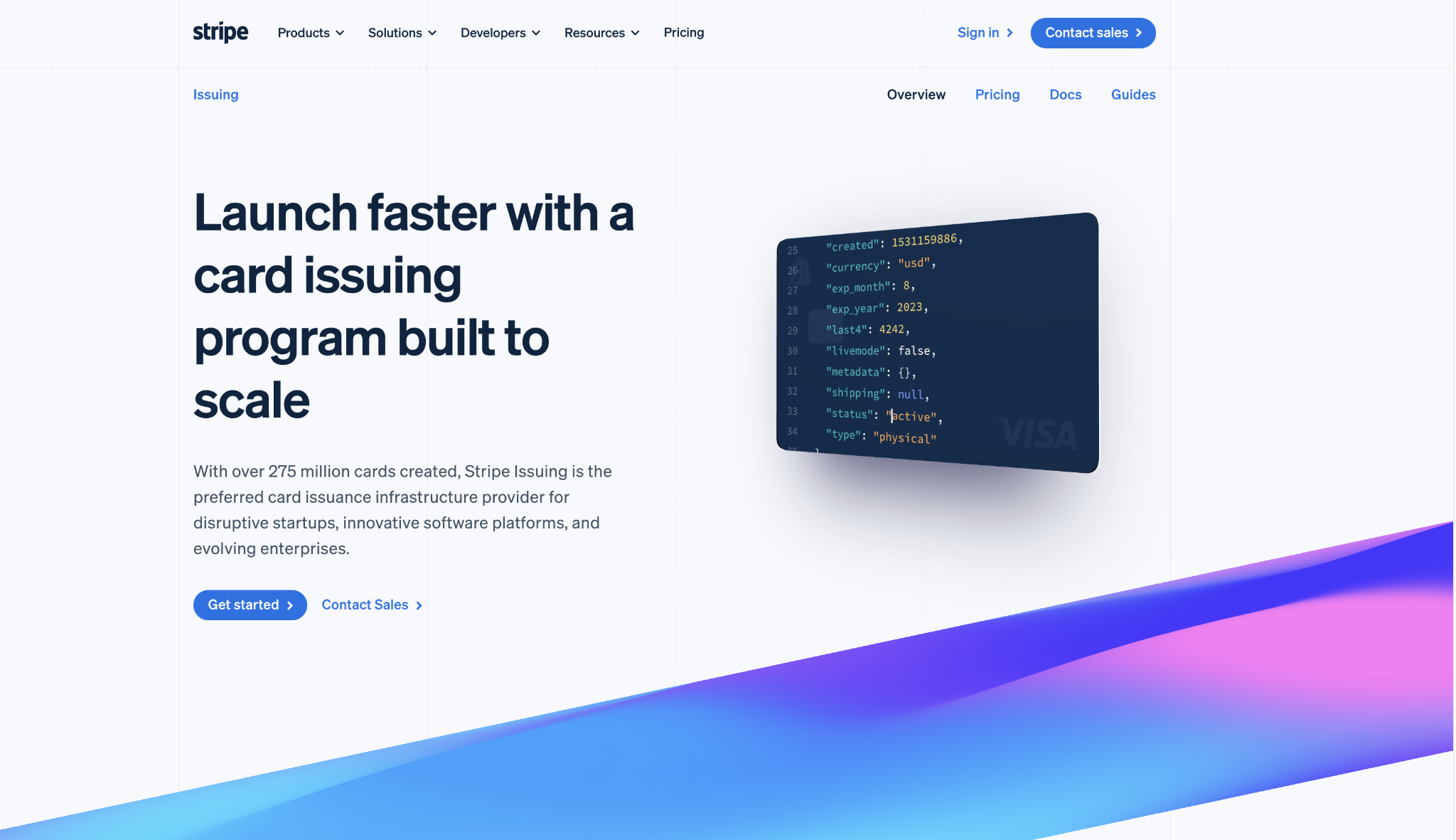
Because approval leans on Stripe's own processing data, a business with a longer history of consistent transaction volume typically qualifies for a higher credit line than one that just connected its account.
The card earns flat cash back on purchases and reports usage to business credit bureaus without touching the personal credit file tied to the soft inquiry.
The card fits most naturally as an add-on for companies already inside the Stripe ecosystem rather than a standalone corporate card platform, so it comes with fewer dedicated spend-management features than issuers built around expense controls from the ground up.
A business with thin or inconsistent Stripe processing volume will likely see a modest starting limit until that history builds up.
Stripe pros:
- Soft pull only: No hard inquiry hits personal credit during the application.
- No personal guarantee: The business bears the liability, not the applicant.
- $0 annual fee: No cost to carry the card.
- Flat cash back: Every purchase earns the same rate.
Stripe cons:
- Processing history-dependent: Thin Stripe volume limits the available credit line.
- Charge card structure: Full payment is due each billing cycle.
- Fewer spend-management features: Dedicated corporate card platforms offer more built-in controls.
Best for: Stripe-native e-commerce and SaaS businesses that want a card tied to their existing processing relationship.
Pricing: The Stripe Corporate Card has a $0 annual fee, and the credit line is based on Stripe's processing history and cash reserves rather than a fixed minimum.
5. Nav Prime Card
Nav Prime skips the personal credit check, personal guarantee, and security deposit, with no revenue or time-in-business minimum. It isn't free to hold, though: it requires an active Nav Prime membership, and that fee functions as the card's real annual cost.
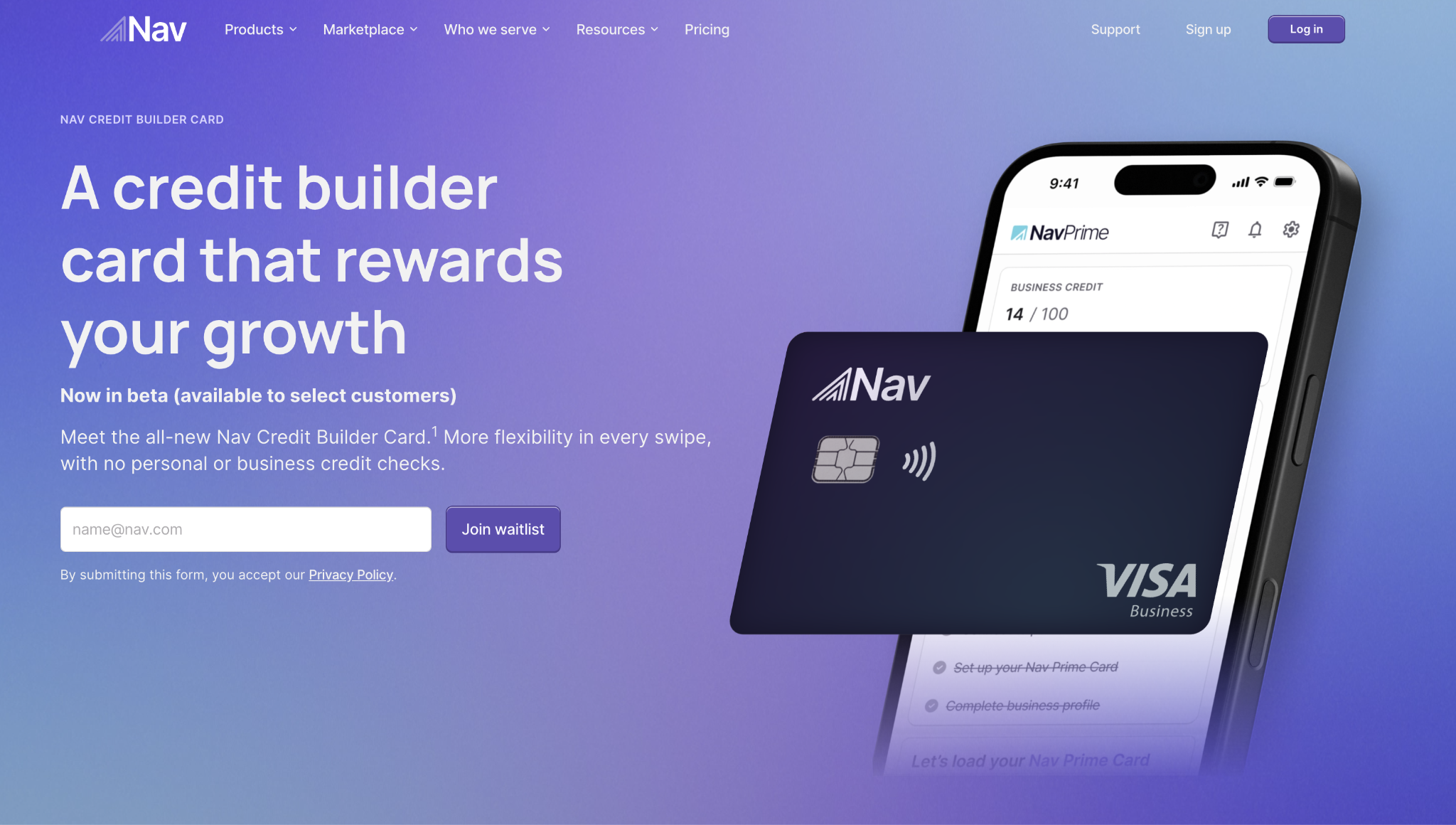
Because there's no revenue or time-in-business requirement, Nav Prime works for companies that would get turned away everywhere else on this list, including businesses just weeks old with no processing history and no bank balance to point to.
The card also reports to business credit bureaus, which helps a thin file start building faster than it would through spending alone.
The membership fee is the part easy to miss in the marketing: at $49.99 a month, it adds up to roughly $600 a year, which is a real cost even though the card itself carries no separate annual fee.
There's no traditional cash back or travel rewards either, so the value proposition is squarely about building a credit file fast, not everyday purchasing rewards.
Nav Prime pros:
- No personal credit check: Approval doesn't depend on a founder's credit history.
- No personal guarantee or security deposit: Nothing is held against the individual, and no cash deposit is required.
- No revenue or time-in-business minimum: Brand-new businesses can qualify.
- Bureau reporting built in: Activity reports to business credit bureaus to help establish a file quickly.
Nav Prime cons:
- Paid membership required: $49.99 per month, totaling roughly $600 per year.
- No traditional rewards: There's no cash back or travel rewards program.
- Modest starting limits: Credit lines start small for businesses with no history.
Best for: Brand-new businesses with no credit history that need to open a business credit file fast and can absorb the membership cost.
Pricing: The Nav Prime Card itself carries no separate annual fee, but it only comes bundled with a paid Nav Prime membership priced at $49.99 a month.
6. Capital on Tap Business Credit Card
Capital on Tap is the one card here that still requires a personal guarantee, fitting newer or lower-revenue businesses that can't clear the cash minimums the fintech charge cards require. It runs a soft pull on personal credit, though a hard pull may hit the business credit file if one already exists.
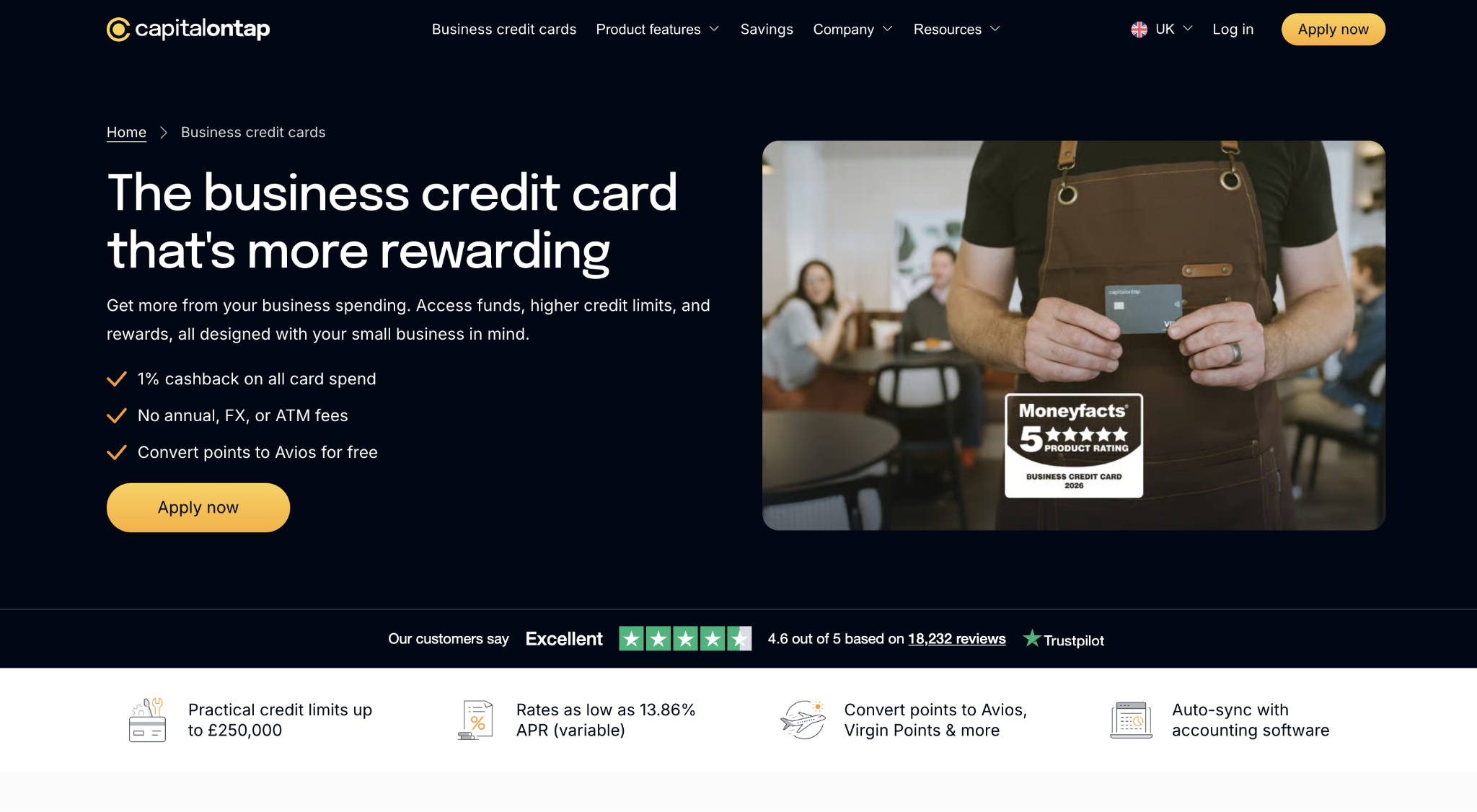
Eligibility comes down to time in business and monthly revenue rather than a bank balance, so a company around six months old with roughly $2,500 in monthly revenue can qualify well before it could clear Ramp's or Rho's thresholds.
Approved businesses earn cash back that increases with autopay enrollment, and the revolving structure lets a balance carry from month to month instead of requiring payment in full.
The personal guarantee sets Capital on Tap apart from every other card in this comparison, so the owner remains personally liable for the balance if the business can't pay. Reporting to business credit bureaus varies by account, so a business counting on this card to build a credit file should confirm reporting status directly with the issuer first.
Capital on Tap pros:
- Lower entry bar: About 6 months in business and $2,500 in monthly revenue are required to qualify.
- Broad entity support: LLCs, corporations, and partnerships can all qualify, without the multi-year track record larger banks expect.
- $0 annual fee: No cost to hold the card.
- Revolving credit: Balances can carry month to month instead of requiring payment in full.
Capital on Tap cons:
- Personal guarantee required: The owner stays personally liable, unlike every other card in this comparison.
- FICO minimum in the high 600s: Personal credit still factors into approval.
- Reporting varies: Business bureau reporting isn't guaranteed, so confirm before counting on it.
Best for: Newer or lower-revenue businesses that need a card without a large cash threshold and don't mind a personal guarantee.
Pricing: The Capital on Tap Business Credit Card has a $0 annual fee and requires roughly $2,500 in monthly revenue and six months in business.
How to choose the right no-credit-check business credit card
We'd work through business stage, fees, and reporting needs in that order before applying. For reliability, follow these steps.
Match the card type to your business stage
If your personal FICO is below 690 and building business credit is the main goal, a secured card or Nav Prime can help demonstrate repayment, even though a secured card still requires a credit check.
If your LLC or corporation has $25,000 or more in the bank, a fintech card like Ramp or Rho becomes realistic with no personal check and no guarantee, while sole proprietors will find Ramp, Rho, Stripe, and Capital on Tap closed off, but BILL Divvy and Nav Prime open. Knowing when to switch cards later matters just as much as the initial pick.
Evaluate fees and repayment terms
Check whether a card is a charge card or a revolving credit card, since that determines whether you can carry a balance.
A charge card requires payment in full each cycle and typically charges no interest, functioning like the 0% APR business credit cards category as long as you pay it off on time, while revolving credit like Capital on Tap lets you carry a balance month to month in exchange for interest.
If your revenue swings from month to month, revolving credit gives you a float that a charge card won't, so also watch for annual fees, membership costs like Nav Prime's, and foreign transaction fees.
Check which credit bureaus the card reports to
If building business credit matters to you, confirm the issuer reports to at least one major business bureau, and whether it reports credit limits or only payment history. This step is easy to skip during a card comparison, but it determines whether responsible use actually creates a credit trail rather than just shifting spend around.
Once you've matched a card to your stage, cash position, and reporting needs, the fastest way forward is usually the option that already fits how your business runs day-to-day. For businesses that already clear the $25,000 cash bar, modern platforms like Ramp are often the simplest starting point on this list.
Frequently asked questions about business credit cards with no credit check
Can a sole proprietor get a business credit card with no credit check?
Sole proprietors have real options, though not every card here takes them. BILL Divvy and Nav Prime accept sole proprietors, while Ramp, Rho, Stripe, and Capital on Tap all require a registered business entity such as an LLC, corporation, or partnership.
Do no-credit-check business credit cards affect personal credit?
No-credit-check cards from fintech issuers usually don't affect personal credit during normal use, since they skip the personal inquiry and report to business bureaus instead. The exception is serious delinquency, which can still trigger collections or personal credit consequences on some cards.
Can I get a business credit card using only my EIN?
You can get several corporate cards using only an EIN, rather than a Social Security number, primarily from fintech issuers like Ramp and Rho. These cards usually require a U.S.-registered LLC or corporation and a meaningful business bank balance, and a D-U-N-S number connects that activity to a Dun & Bradstreet file.
Do no-credit-check business credit cards help build business credit?
They help only when the issuer reports activity to a business bureau, so this depends entirely on the card. Ramp reports to Dun & Bradstreet and Nav Prime dual-reports to speed up new files, but reporting habits vary widely by issuer, so confirm before you apply.
What happens if my business bank balance drops after approval?
Your credit line can shrink since fintech cards tie the limit to your cash position rather than a fixed number. Keep enough cash on hand to cover both operations and the card's availability.


